Preserving the Hunt: How Enterprises Build Threat Intelligence Archives That Survive Analyst Turnover

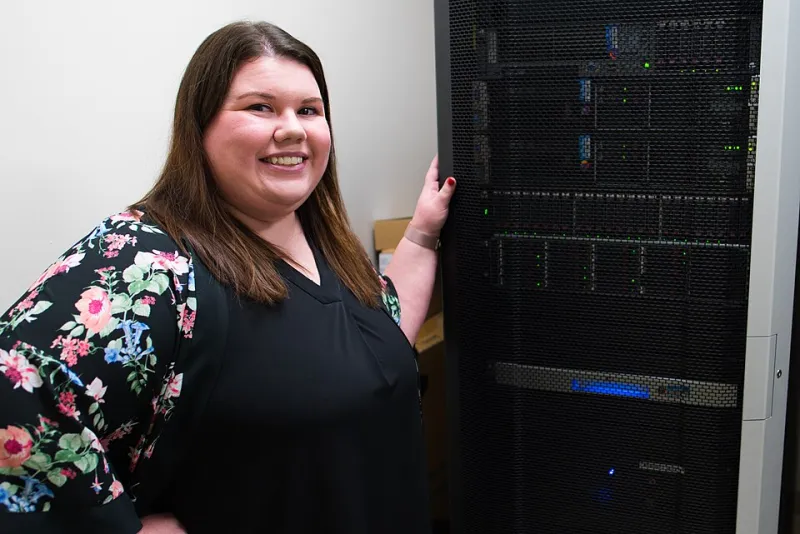
Photo: cybersecurity analyst knowledge management database server room, via www.pcc.edu
Every security organization has experienced some version of the same painful scenario: a senior threat analyst retires or accepts a position elsewhere, and within weeks the team discovers that critical context about a recurring adversary campaign exists nowhere in writing. The indicators are logged. The tickets are closed. But the reasoning, the behavioral patterns, the subtle connections between seemingly unrelated intrusions—all of it departed with the analyst.
This is not a staffing problem. It is an intelligence architecture problem. And organizations that fail to address it are condemned to reinvestigate the same threats repeatedly, each cycle consuming resources that could be directed at emerging risks.
The Hidden Cost of Institutional Amnesia
The security industry invests heavily in tooling—SIEMs, EDR platforms, threat intelligence feeds—but comparatively little in the systematic capture of human analytical judgment. Raw telemetry is abundant. Interpreted, contextualized knowledge is scarce and fragile.
Consider what a seasoned malware analyst actually carries in memory: the specific obfuscation quirks of a threat actor they tracked for two years, the infrastructure reuse patterns that link apparently unrelated campaigns, the false-positive signatures that wasted three weeks of investigation time on a prior engagement. None of this typically appears in a closed incident ticket. It lives in the analyst's mental model, occasionally surfacing in verbal briefings or informal Slack threads before disappearing entirely upon departure.
Research from the cybersecurity workforce community consistently identifies analyst turnover as one of the top contributors to degraded detection capability. When institutional memory evaporates, mean time to detect climbs, adversaries who have been previously fingerprinted operate unrecognized, and new analysts duplicate investigative work their predecessors completed years earlier.
What a Functional Malware Knowledge Base Actually Contains
Effective threat intelligence archives differ substantially from standard incident documentation. A closed ticket records what happened. A knowledge base entry explains why it matters, how it connects to prior activity, and what an analyst should look for next time.
The most operationally useful entries tend to include several components that routine documentation omits:
Behavioral narratives over indicator lists. Indicators of compromise age quickly—domains get sinkholed, IPs rotate, hashes change with each recompile. The behavioral logic underlying an attack—how a particular loader stages its payload, how a specific threat actor pivots from initial access to lateral movement—remains valid far longer. Knowledge bases that prioritize behavioral description over raw IOC lists retain utility across multiple campaigns and tool iterations.
Analyst reasoning chains. Documenting how a conclusion was reached is as important as documenting the conclusion itself. When a successor analyst encounters a similar pattern, understanding the inferential steps taken previously accelerates their analysis and prevents them from dismissing a genuine detection because they lack the contextual foundation their predecessor built over years.
Negative findings with explanations. Paths investigated and ruled out are among the most undervalued intelligence artifacts. Recording why a particular hypothesis was discarded prevents future analysts from retreading the same unproductive ground—a form of efficiency that compounds significantly over time.
Cross-campaign linkage annotations. Individual incidents rarely exist in isolation. Annotating connections between cases—shared infrastructure, overlapping TTPs, code similarities—transforms a collection of discrete records into a relational intelligence map.
Common Pitfalls That Produce Knowledge Silos Instead of Knowledge Bases
Organizations that attempt to build institutional memory frequently undermine their own efforts through predictable structural failures.
The most common is tool-centric documentation discipline. When analysts are required to document findings inside a SIEM or ticketing platform not designed for narrative knowledge capture, entries become terse and technical by necessity. The platform's interface shapes the content, and rich analytical context gets stripped away in favor of fields the system is designed to accept.
A second persistent failure is the absence of documentation as a workflow step. When knowledge capture is treated as optional or performed only under exceptional circumstances, it defaults to never. Organizations that achieve durable institutional memory embed documentation requirements directly into incident response procedures, with explicit time allocations for post-incident knowledge synthesis.
Siloed ownership presents a third obstacle. In organizations where threat intelligence, incident response, and malware analysis operate as separate functional units with limited cross-pollination, knowledge bases fragment along organizational lines. An IR team's documentation of attacker behavior and an intel team's campaign attribution analysis may address the same threat actor without either team recognizing the connection—because neither archive is accessible to the other.
A Framework for Converting Incident Data Into Compounding Intelligence
The organizations that build the most durable threat knowledge bases tend to follow a disciplined conversion process that moves raw incident data through several enrichment stages.
Stage one: Immediate capture. Within 24 to 48 hours of incident closure, the lead analyst documents a structured narrative entry covering the attack chain, key behavioral observations, and any anomalies that deviated from expected patterns. This entry is explicitly not a compliance document—it is written for a future analyst who will need to recognize the same threat in a different form.
Stage two: Cross-reference enrichment. Within one to two weeks, the entry is reviewed against prior knowledge base records. Connections to previous campaigns, shared infrastructure observations, and overlapping TTPs are annotated. This step is most effective when performed by a second analyst who brings fresh perspective to the linkage analysis.
Stage three: Abstraction and generalization. Periodically—quarterly is a practical cadence for most organizations—knowledge base entries are reviewed at a campaign level to extract higher-order patterns. Individual incident entries are synthesized into threat actor profiles, behavioral signatures, and detection hypotheses that inform proactive hunting priorities.
Stage four: Accessibility auditing. A knowledge base that cannot be efficiently queried provides limited operational value. Periodic reviews should assess whether analysts can locate relevant prior intelligence within a reasonable time window when responding to active incidents. If retrieval is cumbersome, the architecture requires revision regardless of how thorough the underlying content may be.
Making Institutional Memory a Competitive Advantage
The security teams that consistently outperform their peers in detection capability and response efficiency are rarely those with the most sophisticated tooling. They are the teams that have accumulated and preserved the deepest understanding of the adversary landscape they operate within.
Building that understanding requires treating analytical knowledge as an organizational asset with the same rigor applied to any other critical infrastructure component. Analysts leave. Threats evolve. But a well-engineered knowledge base compounds in value with every incident, every campaign, and every analyst who contributes to it—transforming individual expertise into collective intelligence that no single departure can erase.
For security leaders evaluating their current state, the diagnostic question is straightforward: if your three most experienced analysts departed tomorrow, how much of what they know would your organization retain? The answer defines the distance between where you are and where you need to be.