Archaeology of Malice: How APT Groups Strip-Mine Defunct Malware Projects for Operational Components
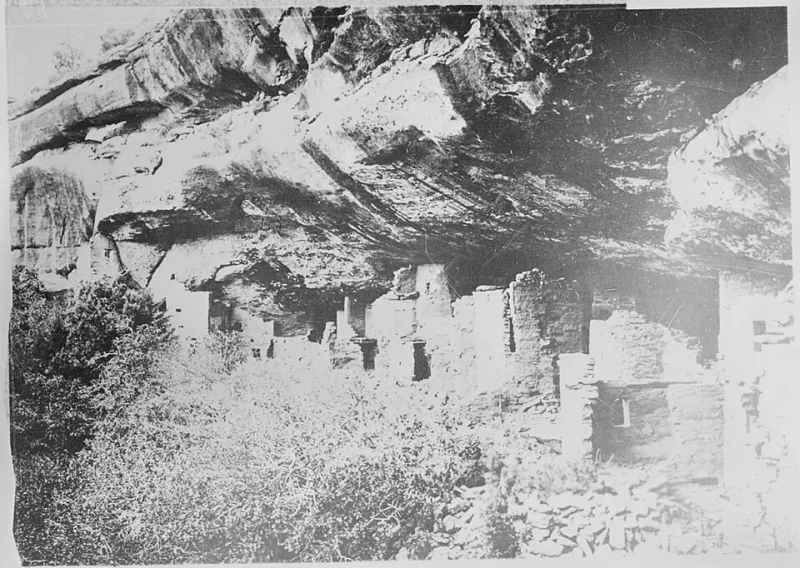
Photo: Unknown authorUnknown author or not provided, Public domain, via Wikimedia Commons
In the physical world, archaeologists sift through ruins to reconstruct how civilizations once operated. In the threat landscape, a parallel discipline has emerged — except the excavators are adversaries, and the ruins they mine are defunct malware projects, leaked GitHub repositories, and the decaying archives of shuttered cybercriminal forums. Advanced Persistent Threat (APT) groups and sophisticated criminal operators have learned that abandoned code is not dead code. It is raw material.
For enterprise security teams, this reality demands a shift in how threat intelligence is framed. The question is no longer simply "what new malware is emerging?" It is equally important to ask: "Which discarded codebases are about to be resurrected?"
The Economics of Code Reuse in Adversarial Operations
Building functional malware from scratch is expensive in every meaningful sense — it demands developer time, operational security discipline, and extensive testing to evade modern endpoint defenses. Threat actors, like any resource-constrained organization, are perpetually optimizing their cost-to-impact ratio. Legacy malware repositories offer a compelling shortcut.
When a malware family is abandoned — whether because its operators were arrested, the project became commercially unviable, or the codebase was simply superseded — the underlying code rarely disappears entirely. Source leaks, forum archive mirrors, and dark web repositories ensure that the intellectual property of defunct projects persists indefinitely. The 2016 leak of the Mirai botnet source code remains the most widely cited example: within months of publication, dozens of derivative variants had been catalogued by researchers, each adapted for distinct operational purposes.
But Mirai is merely the most visible case. The same dynamic has played out with banking trojans like Gozi (ISFB), remote access tools such as NjRAT, and commodity stealers whose source code has circulated across Telegram channels and paste sites for years. Each leaked codebase becomes a parts catalog for adversaries willing to invest the modest effort required to strip out useful modules and integrate them into new tooling.
What Adversaries Actually Extract
Not all components of a legacy malware family are equally valuable to a threat actor performing this kind of code archaeology. Understanding what is being harvested clarifies where defenders should focus their detection logic.
Persistence mechanisms represent one of the most frequently recycled categories. Registry manipulation routines, scheduled task injection logic, and boot sector persistence code are functionally stable across operating system generations — a persistence technique that worked in 2017 often requires only minor modification to function in a contemporary Windows 11 environment.
Command-and-control (C2) communication protocols are another high-value extraction target. Custom encryption schemes, domain generation algorithms (DGAs), and traffic obfuscation logic embedded in legacy malware represent significant prior engineering investment. Reusing these components allows threat actors to inherit the obfuscation sophistication of a predecessor project without rebuilding it.
Credential harvesting modules, particularly those targeting browser credential stores and Windows credential APIs, tend to age gracefully. The underlying APIs these modules exploit are rarely deprecated, meaning that harvesting code from a trojan developed five years ago may still function effectively against current targets.
Evasion logic, including anti-analysis routines, virtual machine detection, and sandbox-aware execution delays, represents perhaps the most tactically valuable category of extractable components. Evasion techniques that successfully defeated analysis environments in earlier years are often still effective, particularly against organizations that have not updated their sandboxing infrastructure.
Case Studies in Adversarial Excavation
The operational history of several well-documented APT campaigns illustrates how this recycling process manifests in practice.
The Lazarus Group, attributed by US government agencies to North Korean state interests, has demonstrated a consistent pattern of incorporating components from publicly available or previously leaked malware into its custom tooling. Researchers tracking the group's banking sector campaigns have identified persistence and lateral movement code bearing structural similarity to older, publicly circulated remote access frameworks — suggesting deliberate harvesting rather than coincidental parallel development.
Iran-linked operators tracked under various designations have similarly been observed deploying tools that incorporate credential theft logic traceable to commodity stealers whose source code circulated on Persian-language cybercriminal forums years before the campaigns in question. The reuse is rarely verbatim; typically, functional modules are extracted, recompiled, and wrapped in new infrastructure. But the underlying logic remains recognizable to analysts who maintain longitudinal visibility into the malware ecosystem.
In the ransomware sector, the pattern is equally pronounced. Multiple ransomware variants that emerged following the partial disclosure of REvil's source code exhibited encryption logic and victim communication workflows clearly derived from that codebase. Each derivative inherited both the strengths and — critically — the behavioral fingerprints of its ancestor.
Turning Threat Archaeology Into Predictive Defense
If adversaries are systematically mining legacy codebases, then security teams that maintain structured visibility into those same codebases hold a meaningful intelligence advantage. The discipline of threat archaeology — cataloguing, analyzing, and monitoring legacy malware families for signs of adversarial interest — is an underutilized capability in most enterprise security programs.
Practically, this means tracking which legacy malware families have recently experienced renewed discussion on dark web forums, paste sites, or Telegram channels. A spike in references to a particular codebase often precedes derivative campaigns by weeks or months. Organizations with threat intelligence subscriptions should be actively querying their providers for this category of signal.
It also means maintaining behavioral detection rules anchored to the functional logic of high-risk legacy families — not just their signatures. When a threat actor extracts a persistence module from a 2018-era banking trojan and wraps it in new infrastructure, the file hash will not match any known indicator. But the registry key manipulation sequence, the API call pattern, or the DGA algorithm may be functionally identical. Behavioral detection logic built against the original family will catch the derivative.
Finally, security teams should develop and maintain a structured watch list of legacy malware families whose source code is known to be publicly accessible or widely circulated in adversarial communities. Families with confirmed source leaks, particularly those with modular architectures that lend themselves to component extraction, represent the highest-probability candidates for adversarial recycling. Prioritizing detection coverage for these families — even when they appear operationally dormant — is a sound investment.
The Blacklist Imperative
The instinct to deprioritize threats that appear to have run their operational course is understandable. Security teams operate under resource constraints, and attention naturally flows toward active, visible threats. But the adversary's code archaeology practice exploits precisely this blind spot. When a malware family drops off the active threat radar, defenders relax their vigilance. When a threat actor subsequently excavates that family's source code and deploys a derivative, those same defenders may find their detection coverage has quietly atrophied.
Maintaining a living blacklist of legacy malware families — one that tracks not only known indicators but the functional behavioral signatures that survive code recycling — is among the more durable investments a threat intelligence program can make. Dead code, properly understood, is never truly inert. It is a blueprint waiting for the next architect.